
Kohaku Uta Gassen 2026 airs on Thursday, December 31, from 7:20 to 11:45 p.m. Japan Standard Time (JST). NHK, Japan’s public broadcaster, has announced 20 Red Team acts, 21 White Team acts and a separate performance by Koshi Inaba. ILLIT, Ado and YOASOBI are on the Red Team, and &TEAM and Mrs. GREEN APPLE are on the White Team. If you’re watching from outside Japan, check your local schedule before making plans. The times below are converted from the Japanese broadcast.
Mana Ashida, Masato Sakai, Kazunari Ninomiya and NHK announcer Naoko Suzuki will host the 77th edition. As of November 19, 2026 (JST), the full song list and running order are still unannounced. NHK has confirmed that Inaba will sing “Touch” in a special feature.
- When does Kohaku 2026 start in my time zone?
- How to check where you can watch Kohaku
- Full Kohaku 2026 lineup: Red and White teams
- K-pop, anime songs and returning artists
- Who is hosting the 77th Kohaku?
- Which songs and performance times are confirmed?
- What is Kohaku Uta Gassen?
- Questions about watching Kohaku 2026
- Sources
When does Kohaku 2026 start in my time zone?
The broadcast runs for four hours and 25 minutes on the Japan schedule, including a news break. Every start time below falls on December 31, 2026. In Sydney, the program runs past local midnight into January 1, 2027. In New York and Los Angeles, the broadcast starts in the early morning.
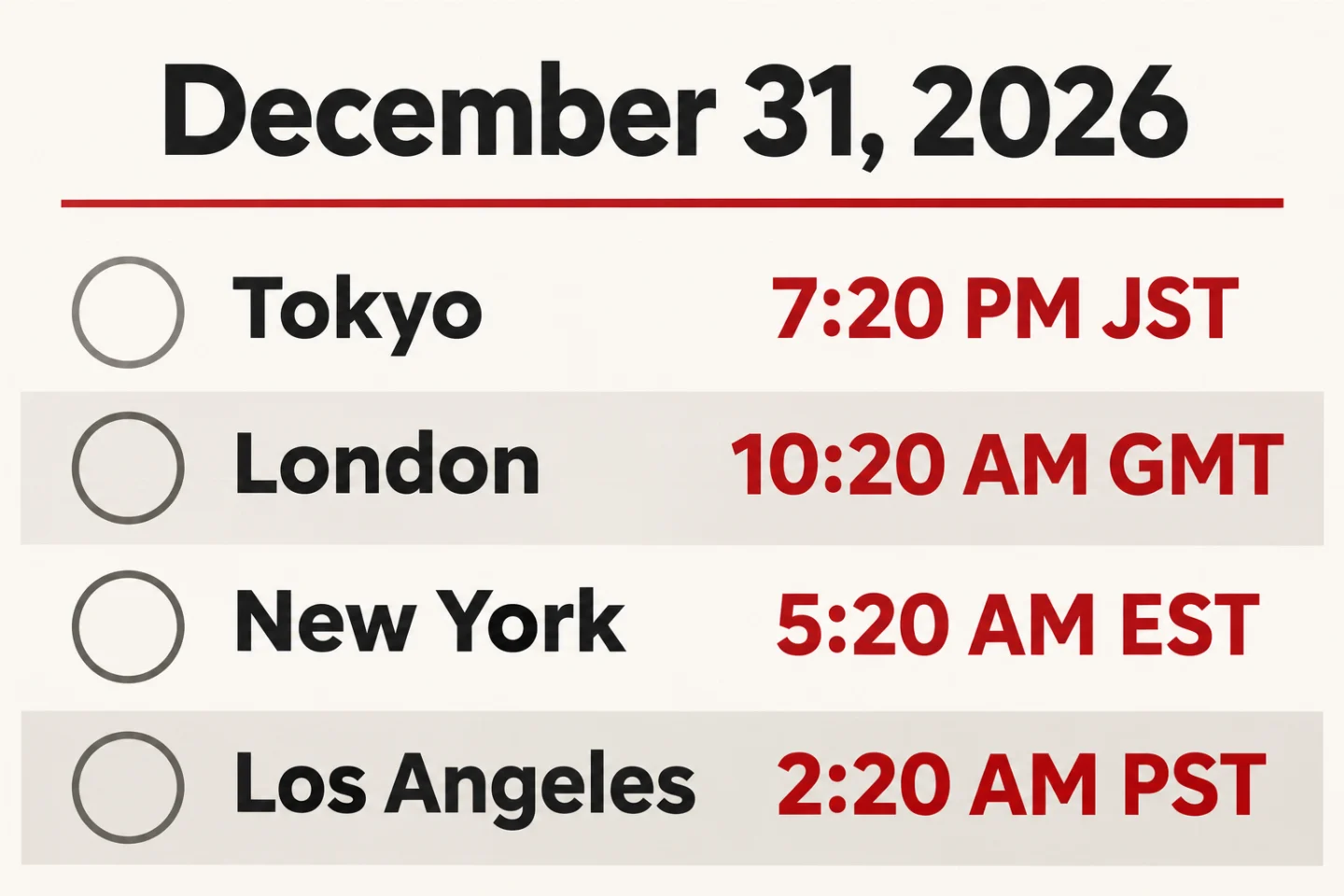
| City and zone | Starts Dec. 31 | Ends Dec. 31 unless shown |
|---|---|---|
| Tokyo (JST) | 7:20 p.m. | 11:45 p.m. |
| Seoul (KST) | 7:20 p.m. | 11:45 p.m. |
| Taipei (UTC+8) | 6:20 p.m. | 10:45 p.m. |
| Singapore (SGT) | 6:20 p.m. | 10:45 p.m. |
| Sydney (AEDT) | 9:20 p.m. | 1:45 a.m., Jan. 1 |
| London (GMT) | 10:20 a.m. | 2:45 p.m. |
| New York (EST) | 5:20 a.m. | 9:45 a.m. |
| Los Angeles (PST) | 2:20 a.m. | 6:45 a.m. |
On December 31, London, New York and Los Angeles use standard time. Sydney is on Australian Eastern Daylight Time, two hours ahead of Japan. Seoul shares Tokyo’s clock time on the day. If you add the show to a calendar while traveling, set the event’s time zone to Tokyo and let the calendar convert it when you arrive.
Tokyo’s NHK Hall is the venue. Its doors are scheduled to open at 6:00 p.m. JST and the hall program begins at 6:50 p.m. JST, half an hour before the broadcast starts. If you see 6:50 p.m. on an event notice, it refers to the in-person schedule in Shibuya, Tokyo’s district where NHK Hall is located.
How to check where you can watch Kohaku
If you’re outside Japan
Check NHK’s official Kohaku announcements and the English-language program schedule from NHK World Premium. As of November 19, 2026 (JST), we could not verify a live overseas broadcast, stream or on-demand replay for the 77th edition. If a regional listing is released, look for the edition number and the local date as well as the title. The converted times in this guide are useful if your provider lists a simulcast, meaning a broadcast carried at the same time as in Japan.
Check the date on any video labeled “Kohaku live.” NHK announced a stream of the performer press conference on November 13. That was the autumn lineup announcement, separate from the New Year’s Eve concert. The release of a press-conference video does not establish where the December 31 show will air.
If you’re in Japan
NHK lists three television channels: NHK General, the main terrestrial channel, and the satellite channels BSP4K and BS8K. An English-language channel guide may list NHK General under its Japanese name, 総合. NHK AM carries the radio broadcast. Choose a television channel if you want to see the choreography and staging, or use the radio listing if you only need the audio.
NHK ONE is the domestic service listed for video streaming, and NHK ONE Radiru Radiru carries the radio audio online. NHK’s guidance lists simultaneous access and a one-week window after the broadcast for catch-up. The video window is for viewers using the domestic service, so consult the overseas schedule separately if you will be abroad by then.
For NHK ONE, the viewing agreement applies to the household. If your household already has an NHK reception contract, NHK says there is no separate contract or extra charge to use its streaming service. If your household does not have a contract and you want to use the streams, check NHK’s guidance for starting one. The NHK ONE sign-in and the account used to confirm your reception contract serve different purposes. NHK’s instructions show how to link them.
If you watch via a television with a compatible recording function, the television recording gives you a way to watch after the domestic catch-up window closes. The official call for in-person audience applications has closed. It had two October windows: October 1–15 for the general draw and October 16–27 for eligible households with a registered NHK ONE account.
Full Kohaku 2026 lineup: Red and White teams
These tables follow the order of NHK’s November 13 announcement, which sorts acts by their Japanese readings. The appearance number is NHK’s published tally including 2026. “First time” means a Kohaku debut under the name shown. The last column gives the latest previous appearance found under that name in NHK’s performance records, so you can see where a long gap separates two appearances.
Red Team: 20 acts
The Red Team, called Akagumi on the Japanese roster, includes the first-time acts =LOVE and CUTIE STREET. Its four artists with at least 20 appearances are Ishikawa Sayuri, Fuyumi Sakamoto, Yoshimi Tendo and Kaori Mizumori. Ishikawa’s 49 is the highest tally on either 2026 team.
| Act | Appearance | Previous year |
|---|---|---|
| ILLIT | 3 | 2025 |
| Ado | 2 | 2023 |
| ANRI | 4 | 1996 |
| =LOVE | First time | — |
| Ishikawa Sayuri | 49 | 2025 |
| AKB48 | 14 | 2025 |
| Kyary Pamyu Pamyu | 4 | 2014 |
| CUTIE STREET | First time | — |
| Fuyumi Sakamoto | 38 | 2025 |
| Mizue Takada (高田みづえ) | 8 | 1984 |
| CHANMINA | 2 | 2025 |
| Yoshimi Tendo | 31 | 2025 |
| Nogizaka46 | 12 | 2025 |
| HANA | 2 | 2025 |
| FRUITS ZIPPER | 2 | 2025 |
| MISIA | 11 | 2025 |
| Kaori Mizumori | 24 | 2025 |
| Ryoko Moriyama | 11 | 2005 |
| YOASOBI | 4 | 2023 |
| Misato Watanabe | 2 | 2005 |
White Team: 21 acts
The White Team, called Shirogumi on the roster, features first-time acts Ayumu Imazu, Ae! group, EBiDAN, Macaroni Empitsu and MONAKI. Masaharu Fukuyama has the team’s highest published count, at 19. TM NETWORK returns for a second appearance, with 38 years between its previous listing in 1988 and this edition.
| Act | Appearance | Previous year |
|---|---|---|
| Ayumu Imazu | First time | — |
| Ae! group | First time | — |
| EBiDAN | First time | — |
| &TEAM | 2 | 2025 |
| King & Prince | 7 | 2025 |
| Sakanaction | 3 | 2025 |
| Junretsu | 9 | 2025 |
| Masayuki Suzuki | 7 | 2023 |
| SixTONES | 5 | 2025 |
| TM NETWORK | 2 | 1988 |
| T.M.Revolution | 6 | 2014 |
| Leon Niihama | 3 | 2025 |
| Vaundy | 4 | 2025 |
| BE:FIRST | 5 | 2025 |
| Masaharu Fukuyama | 19 | 2025 |
| Macaroni Empitsu | First time | — |
| Mrs. GREEN APPLE | 4 | 2025 |
| M!LK | 2 | 2025 |
| MONAKI | First time | — |
| YUZU | 15 | 2023 |
| L'Arc-en-Ciel | 6 | 2011 |
Special feature: Koshi Inaba
NHK lists Koshi Inaba separately for an announced performance of “Touch,” originally sung by Yoshimi Iwasaki in 1985 as the opening theme for the anime of the same name. Inaba recorded a cover for the 2026 World Baseball Classic, an international baseball tournament, and performed it before Japan’s game against Czechia. For anime fans looking for a confirmed 2026 song, this is the track NHK has named.
This is Inaba’s first solo Kohaku billing. He appeared in 2024 with B’z as the rock duo’s vocalist, and his name appeared in the 2025 records as a featured singer on Masaharu Fukuyama’s “Mokusei.” Those are separate credits. This year’s roster counts seven debuts across the two teams and lists Inaba as the separate solo debut.
K-pop, anime songs and returning artists
Where do ILLIT, &TEAM and HANA appear?
ILLIT is on the Red Team for its third appearance. Its five-member lineup brings together Yunah, Minju and Wonhee, who are from South Korea, and Moka and Iroha, who are from Japan. ILLIT’s 2025 Kohaku performance was “Almond Chocolate.”
&TEAM, on the White Team for the second time, includes EJ from South Korea and NICHOLAS from Taiwan. Its track in the 2025 Kohaku record is “FIREWORK.” HANA returns to the Red Team for its second appearance. The group includes JISOO, who is from South Korea, and performed “ROSE” in the 2025 edition. The Red and White headings indicate how the show bills each act, so you’ll find these performers in more than one part of the roster.
Which past Kohaku performances might anime fans recognize?
Kohaku’s archives also give anime and film fans individual segments to look up. The 2024 Disney Fantasy Medley included songs from Peter Pan and Frozen, alongside “I See the Light” and “When You Wish Upon a Star.” The medley appears in the 75th edition’s special features, alongside that year’s team performances.
For returning names on the current roster, the 2025 archive lists Sakanaction performing “Kaiju” and “Shin Takarajima” together. Vaundy, also back on the White Team, performed “Tokimeki.” These archive entries identify the performances to look up from the 76th edition. Last year’s list puts both titles for Sakanaction in one slot.
How long has it been since some acts last appeared?
Mizue Takada’s most recent previous listing is from 1984. This is her eighth appearance and the longest gap among the returning team acts in the announcement. ANRI last appeared in 1996, and both Ryoko Moriyama and Misato Watanabe last appeared in 2005. Those differences explain how a fourth or an eleventh appearance can also mark a return after decades away.
On the White Team, L’Arc-en-Ciel last appeared in 2011 and T.M.Revolution in 2014. Both have a published total of six this year. Across both teams, 22 acts also performed in 2025, and 12 are returning from an earlier year. Along with the seven debuts, those groups account for the 41 Red and White acts announced in November.
AKB48’s row illustrates another distinction in the table. The group has 14 Kohaku appearances including 2026. The 2025 archive describes its performance as a 20th-anniversary medley because that label refers to the group’s anniversary. When the program puts a number in a performance title, keep it separate from the appearance count next to the act’s name on the roster.
Who is hosting the 77th Kohaku?
NHK announced the four hosts on October 9. Actors Mana Ashida and Masato Sakai are new to hosting the show. Ashida appeared as a singer in the 62nd edition in 2011 and as a guest judge in 2022. Sakai was a guest judge in 2015 and 2023. When you look up their names in previous editions, those credits explain why both can be familiar faces at Kohaku while making their hosting debut.
Kazunari Ninomiya previously hosted the White Team in 2017. This will be his second time hosting under his own name, counted separately from the years he hosted as part of ARASHI. Naoko Suzuki, the NHK announcer on the hosting team, is back for her third straight year after hosting in 2024 and 2025. She is the returning host from last year’s team of Suzuki, Hiroiki Ariyoshi, Haruka Ayase and Mio Imada.
NHK also announced this edition’s theme on October 9: Koete ikō, uta to tomo ni, roughly “Let’s get through it together with song.” The phrase describes the edition as a whole. The November announcement about Inaba’s cover uses the theme to connect a song first released as an anime opening in 1985 with its new life as a baseball anthem in 2026.
Which songs and performance times are confirmed?
NHK announced the performers on November 13. As of the November 19 check, “Touch” is the announced song for Inaba’s special feature. The complete list of songs and the running order remain unannounced. In a Japanese announcement, look for kyokumoku (曲目) for song titles and kyokujun (曲順) for the running order. The two releases answer different questions.
In 2025, the full song list came out on December 19 and the running order on December 26. The previous five editions’ song-list announcements fell between December 19 and 23, and their running-order announcements fell on December 26 or 27. These dates are past records. NHK has yet to give a release date for this year’s two lists.
A running order gives you the sequence of performances. To see why this matters, look at the 2025 closing stretch: MISIA and Mrs. GREEN APPLE closed out their respective teams, and Seiko Matsuda had a special feature after the teams’ performances. In Japanese coverage, tori means a closing slot and can refer to the final act on a team. Check the special features as well if you want to know who sings last in the entire show.
The beginning of the show has a similar distinction. ME:I opened the Red Team’s performances with “Click” in 2024, and Kocchi no Kento was the White Team’s first listed act with “Hai Yorokonde.” In 2025, the first team performances were CANDY TUNE’s “Baibai FIGHT!” and Leon Niihama’s “Fun! Fun! Fun!” after an opening medley. The archive marks the group number as the program opening and lists the two team acts separately.
Song announcements can also list a medley, several songs combined into one performance. AKB48’s 2025 anniversary medley included “Flying Get,” “Heavy Rotation,” “Koi Suru Fortune Cookie” and “Aitakatta.” One line in a future song list can therefore contain multiple titles. If you’re planning to watch only one singer, wait for the running order and allow time for the performances immediately before that slot.
What is Kohaku Uta Gassen?
Kohaku Uta Gassen means “Red and White Song Battle.” The program dates back to 1951 and is now NHK’s annual New Year’s Eve music show. The Red and White teams compete, with a winning team announced at the end. The 2025 edition was won by the White Team, after a Red Team win in 2023 and a White Team win in 2024.

NHK’s program records separate the team performers from tokubetsu kikaku, its name for special features. The format can include solo performances, collaborations and group numbers linked to other NHK programs. For example, the 2025 edition paired the team competition with a stage inspired by Anpan, an NHK morning drama, that included the “Anpanman March.” The opening medley that year marked 100 years of broadcasting in Japan with songs including “Paprika” and “Ue o Muite Arukō.” The host, team and special-feature credits in the archive show how those parts fit into one evening.
Guest judging is a distinct role in the program’s records. Ashida’s appearance as a guest judge in 2022 sits alongside a separate hosting lineup in NHK’s archive for that year. The ten editions from 2016 through 2025 produced four Red Team wins and six White Team wins. Across the first 76 editions, the result was 34 Red Team wins and 42 White Team wins. Check the 77th edition’s official notices for this year’s judging and voting details.
Questions about watching Kohaku 2026
Does Kohaku count down to midnight in Japan?
The 2026 broadcast is scheduled to end at 11:45 p.m. JST, 15 minutes before midnight in Tokyo. Sydney viewers following a live feed would reach local midnight during the broadcast because Sydney is two hours ahead.
Why do some headlines count 41 performers and others count 42?
The 41 figure counts the acts listed for the Red and White teams. The 42 figure also includes Koshi Inaba’s special feature. Both figures count acts, so a group such as AKB48 occupies one entry, whatever its number of members on stage.
Can a special feature count toward an artist’s appearances?
It can. NHK records back number under a special feature in 2022 and marks the band’s White Team appearance in 2025 as its second. To check an artist’s total against past programs, include the special features in your search as well as the two teams. Some special-feature entries have no published number of appearances, in which case the archive gives the credit without a tally.
How can I match an English artist name to NHK’s Japanese guide?
On NHK’s roster, Sakanaction appears as サカナクション and Macaroni Empitsu as マカロニえんぴつ. Look under 白組 for either act. Aぇ! group, which STARTO ENTERTAINMENT renders as Ae! group in English, also appears in that section. Some acts such as YOASOBI and ILLIT use the same lettering in NHK’s list.
Which roster should I use to compare different years?
NHK’s program archive is a record of the broadcast, which can differ from the November announcement for that edition. When comparing years, check whether your source is counting the acts announced at the press conference or the artists on the final broadcast roster. In 2025, back number was announced on December 11, after the November 14 press conference, and appears in the final White Team record.
Sources
- NHK’s 77th Kohaku roster: teams, appearance counts and special feature
- NHK’s broadcast and NHK Hall schedule
- NHK’s host announcement and 2026 theme
- NHK’s lineup press conference notice and announcement of Koshi Inaba’s “Touch”
- NHK’s Kohaku archive, including the 2023, 2024 and 2025 performance records
- NHK’s archive for the hosts’ earlier appearances in 2017 and 2022
- NHK’s guide to linking your NHK ONE and reception-fee accounts
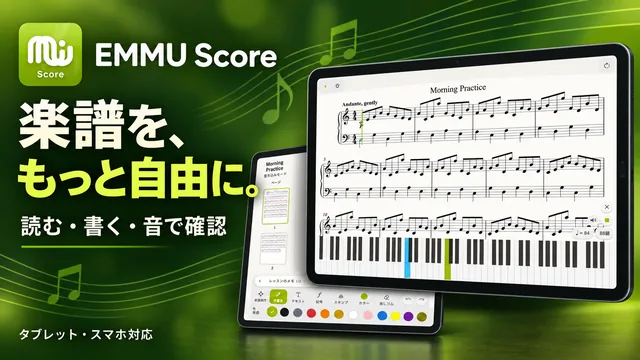
楽譜を、もっと自由に。
PDF・画像の楽譜を読み込み、手書きや音楽記号で書き込み。楽譜の作成や、MusicXML形式の楽譜の音を再生して確認することもできます。
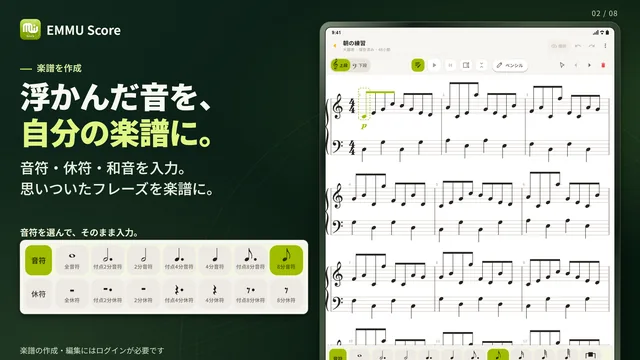
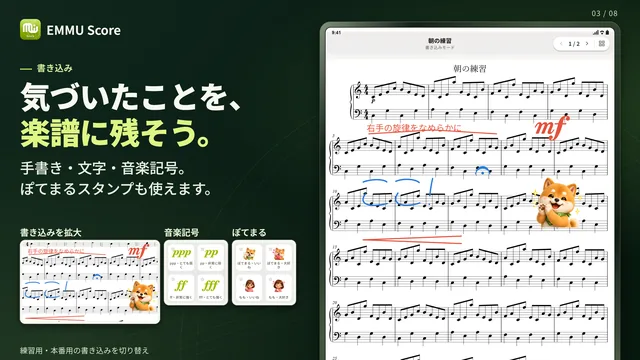


弦楽器のTAB譜の作成にも対応しています。
練習も、連絡も、ひとつに。
練習日程・出欠・演奏曲をまとめて管理。写真・動画・音源・楽譜も、グループの仲間と共有できます。